
B2B buy now pay later is one of several models designed to provide short-tenor working capital at the point of a business transaction. In India, its regulatory treatment depends on the actual structure: who extends credit, who makes the underwriting decision, how funds move and whether any entity also performs a regulated payment-system activity. The product label does not determine the legal outcome.
Quick Answer
B2B BNPL is short-term credit embedded in a business purchase, often using invoice, transaction, bank and tax data to assess the buyer. If a bank or NBFC provides the credit through a digital journey or LSP arrangement, the applicable RBI digital-lending and outsourcing requirements must be assessed. The lender remains responsible for credit policy and regulatory compliance; payment activities require separate analysis under the Payment and Settlement Systems Act and related RBI rules.
What Makes B2B BNPL a Different Credit Product
Traditional trade credit is a relationship product. A supplier extends 30, 60, or 90-day terms to a buyer it knows, based on payment history built over multiple transactions, and the supplier itself carries the risk of late or non-payment.
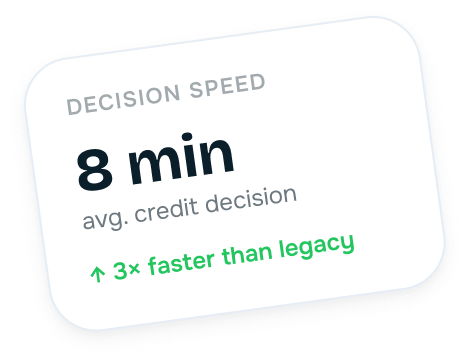
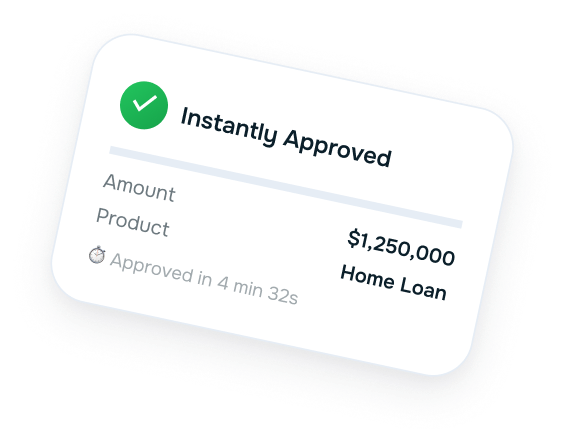
B2B BNPL supplements or replaces part of the supplier’s relationship-based assessment with a structured credit decision by the financing party. The model may use GST and e-invoice data, bank transactions, order history and repayment behaviour, subject to consent, data quality and policy controls. Decision speed varies by product and exception path; fast processing does not remove the need for accountable underwriting.
Recourse vs Non-Recourse: Where the Risk Actually Sits
The underwriting model only tells half the story. The other half is who bears the loss if the buyer defaults. B2B BNPL providers structure this in two different ways.
Under a recourse arrangement, the contract can require the merchant or seller to repurchase or cover specified non-payment risk. Under a non-recourse arrangement, the financier generally assumes eligible buyer credit risk, subject to exclusions such as disputes, fraud, dilution or breach of representations. Pricing and accounting depend on the detailed allocation of risk, not only on the recourse label.
For a lender evaluating whether to build, buy, or partner into B2B BNPL, this distinction determines the actual risk being underwritten. A non-recourse book means the lender’s own balance sheet carries buyer default risk directly. A recourse book shifts that risk back to the merchant, which changes both the pricing model and the credit analysis required.
Why RBI Treats Payment and Credit as Separate Businesses
RBI has been consistently strict about entities that combine payment, clearing, and settlement functions with lending activity in a single, loosely structured product. Running a payment system requires authorisation under the Payment and Settlement Systems (PSS) Act, 2007, entirely separate from the licensing required to extend credit. A BNPL model that blends both inside one unregulated front-end sits directly in the gap regulators have been closing.
Where B2B BNPL is offered by a regulated entity through a digital journey or an LSP, the RBI’s Digital Lending Directions and applicable outsourcing rules can shape customer disclosure, fund flow, data use and oversight. Core decision-making functions cannot simply be transferred to an unregulated front end. Any payment-system or aggregation activity must be assessed separately under the applicable authorisation framework.
How This Plays Out for MSME-Focused B2B BNPL
For MSME-focused products, ecosystem data can supplement conventional bureau and financial information. Lenders should test whether GST filings, invoices, bank transactions, orders and distributor records are complete, timely and predictive for the target segment. Alternative data expands the evidence available; it does not automatically make an applicant creditworthy.
The structural discipline that survives scrutiny is straightforward even if it’s not simple to build: the credit decision and disbursal run through a regulated lending partner, not through the platform itself acting as an unlicensed hybrid of payment processor and lender. Products built this way from the outset tend to face far less regulatory risk than ones retrofitting compliance after scaling on ambiguity.
B2B BNPL vs Traditional Trade Credit vs TReDS
| Factor | Traditional trade credit | B2B BNPL | TReDS |
| Who assesses credit risk | The supplier itself | The financier or regulated lender under its approved policy | Financiers bidding on the platform, based on buyer strength |
| Underwriting basis | Trading relationship, trade references | Real-time GST, e-invoice, and transaction data | Buyer’s payment obligation on a registered invoice |
| Decision speed | Days to weeks | Potentially rapid for eligible cases; exceptions take longer | Hours to days, via auction |
| Who holds default risk | The supplier | Merchant (recourse) or provider (non-recourse) | The financier who wins the invoice, generally without recourse to the MSME seller |
| Regulatory framework | Primarily contractual, with applicable commercial and sectoral law | Depends on structure; RBI lending and outsourcing rules may apply | RBI TReDS framework and applicable directions |
Evaluation Checklist: Assessing a B2B BNPL Opportunity in India
- Does the arrangement cleanly separate payment functions from credit decisioning, or does the same entity handle both without the authorisation each requires?
- Is the actual lending decision made and owned by a regulated bank or NBFC, consistent with RBI’s (Digital Lending) Directions, 2025, rather than resting with an unregulated fintech front-end?
- Does the underwriting model draw on real-time data sources like GST e-invoicing and bank transaction history, or a repackaged version of traditional credit scoring running faster?
- Does the arrangement carry recourse or non-recourse terms, and does that match the lender’s actual risk appetite for MSME buyer default?
- How does this product compare to TReDS for the same underlying receivable, and is it actually differentiated or simply a faster wrapper on the same credit risk?
- Is any payment aggregation activity within the product properly authorised under the PSS Act, kept structurally distinct from the credit decisioning itself?
Bottom Line
B2B BNPL is a credit structure, not merely a faster checkout experience. Lenders should define the obligor, credit owner, recourse terms, data basis, fund flow, servicing model and regulatory responsibilities before launch. Where regulated lending or payment activities are involved, the operating model must match the applicable RBI framework rather than rely on the BNPL label.
Last reviewed: September 22, 2026. This article provides general information, not legal advice. Product structure and regulatory applicability should be confirmed against current RBI directions and professional advice.
Define the credit owner, recourse, data, fund flow and servicing controls before designing a B2B BNPL journey for SMEs.
Frequently Asked Questions (FAQs)
How is B2B BNPL underwriting different from a traditional trade credit decision?
Traditional trade credit is decided by the supplier itself, based on relationship history, often over days. B2B BNPL underwriting is done by a third-party financier using real-time data sources like GST e-invoicing or bank transaction history, producing a decision in seconds rather than days.
Why does RBI treat payment functions and credit functions as separate regulatory concerns for BNPL?
Running a payment system requires authorisation under the PSS Act, 2007, while extending credit requires separate lending licensing or a partnership with a regulated entity. A BNPL model that combines both inside one unauthorised structure creates the regulatory ambiguity RBI has been trying to close.
Do the RBI Digital Lending Directions apply to every B2B BNPL product?
Not solely because the product is called BNPL. Applicability depends on the entity extending credit, the digital journey and the role of any LSP. Where a regulated entity provides a digital loan through an LSP, the regulated entity remains accountable and the applicable Directions and outsourcing requirements must be followed.