
Supply Chain Finance (SCF) has evolved into a vital liquidity management mechanism for modern global commerce. Historically dominated by basic reverse factoring for large corporate buyers, the market now encompasses a wide variety of structured trade solutions. Today, commercial banks and non-bank lenders must deliver approved payables financing, purchase order funding, distributor finance, and receivables discounting across diverse regional markets.
Despite growing commercial demand, many financial institutions are constrained by monolithic trade finance technology. Traditional platforms rely on hardcoded software architectures where each financing product is built as a distinct, isolated module. This structural rigidity prevents institutions from scaling their trade operations efficiently. To remain competitive, modern SCF platforms must adopt configurable product templates.
The Bottleneck of Hardcoded SCF Infrastructure
In traditional supply chain finance systems, introducing a new trade product or altering an existing commercial structure requires deep code modifications. If an institution wants to expand from buyer-backed payables finance into pre-shipment distributor finance, software developers must build new database schemas, rewrite business logic, and construct separate user interfaces.
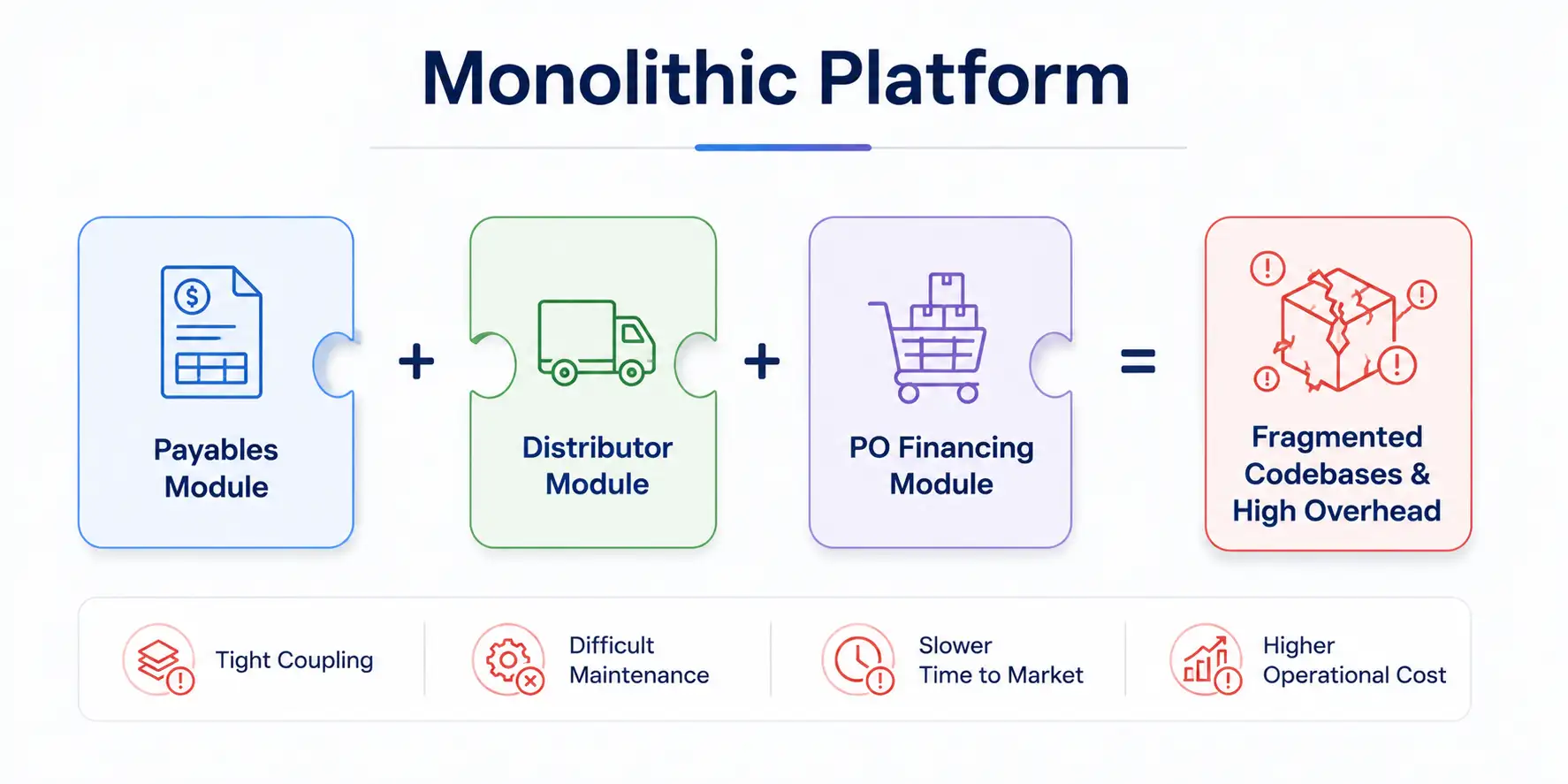
This monolithic framework creates significant operational friction:
- Extended Time-to-Market: Launching a custom financing program for a corporate client can take six to twelve months, leading to lost business opportunities.
- High Development and Maintenance Costs: Maintaining separate codebases for distinct financing products inflates IT budgets and increases technical debt.
- Siloed Risk and Reporting: Fragmented systems prevent risk managers from gaining a unified view of overall exposure across a corporate client’s supplier and distributor network.
Understanding Configurable Product Templates
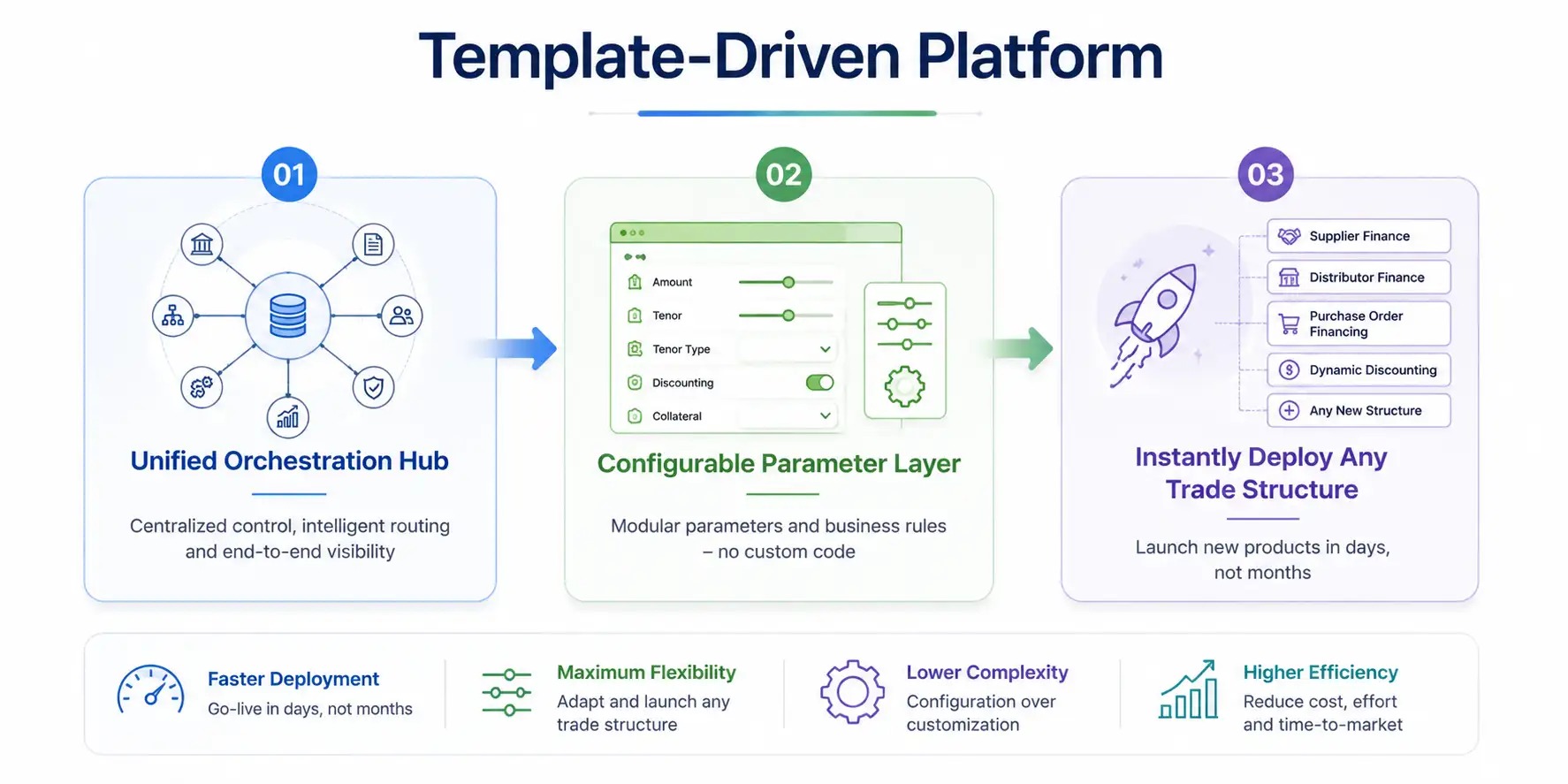
A configurable product template is a flexible, parameter-driven framework that defines the complete lifecycle of a trade finance instrument without requiring custom software development. Rather than hardcoding business logic, the platform exposes a comprehensive suite of business and operational rules that product managers can adjust through an administrative dashboard.
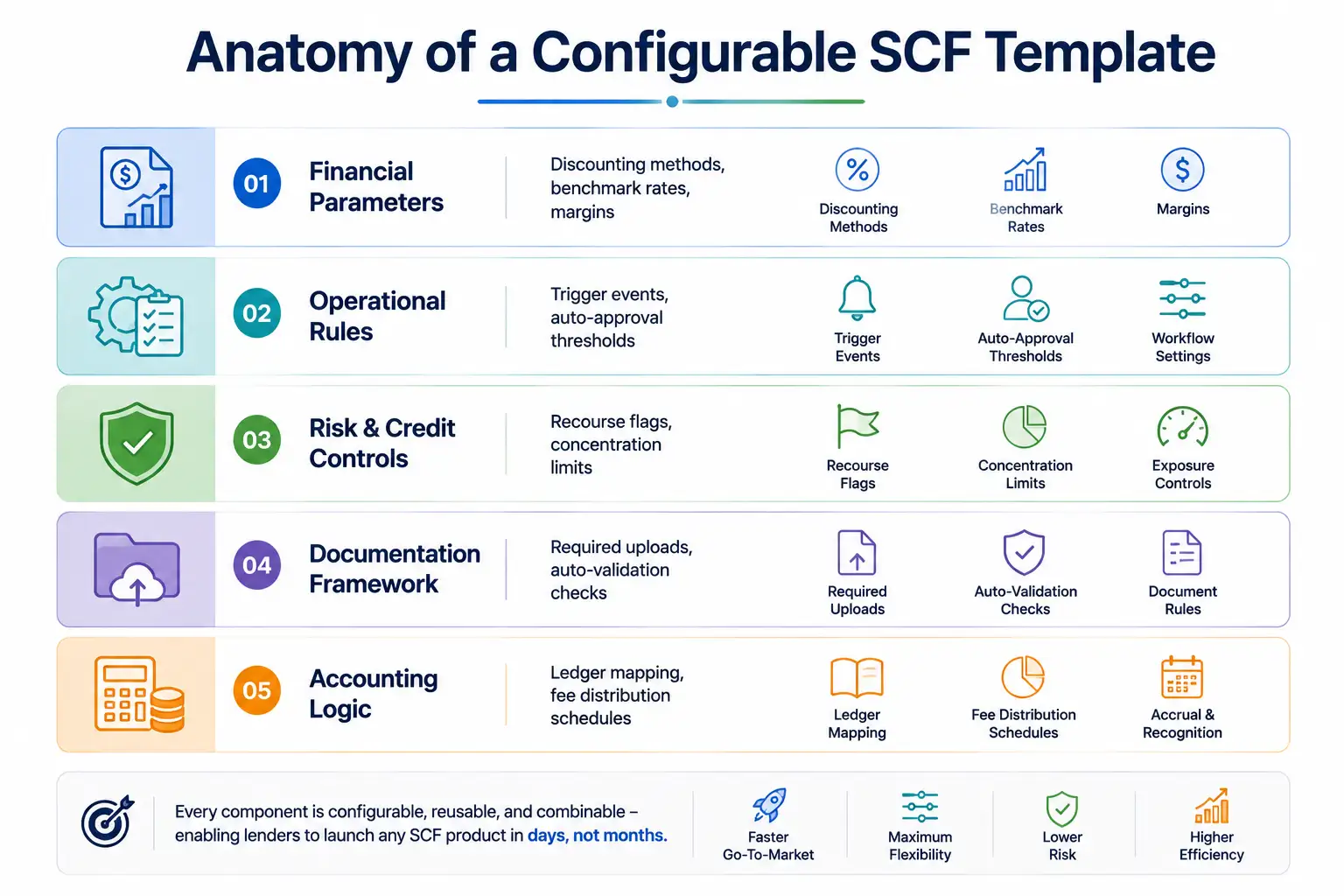
These templates abstract the core mechanics of a trade transaction into flexible configuration categories:
- Financing Mechanics: Defines whether calculation logic relies on fixed discounting, dynamic interest margins, or benchmark rates (such as SOFR or localized central bank reference rates).
- Risk and Recourse Structuring: Toggles parameters for recourse versus non-recourse facilities, credit insurance integrations, and buyer-supplier concentration caps.
- Lifecycle and Settlement Triggers: Specifies what event unlocks capital disbursement, such as purchase order issuance, goods receipt confirmation, or final invoice approval.
- Documentation and Compliance Requirements: Configures required trade documents (e.g., bills of lading, customs declarations, tax invoices) and establishes automated validation rules for each transaction type.
Key Advantages for Senior Leadership
1. Accelerated Product Deployment
Configurable templates compress product development cycles from months to days. When an institutional corporate client requests a bespoke financing structure, product teams can clone an existing template, adjust the necessary financial parameters, and deploy the new offering immediately. This agility allows lenders to capture market share rapidly.
2. Multi-Geography and Multi-Entity Adaptability
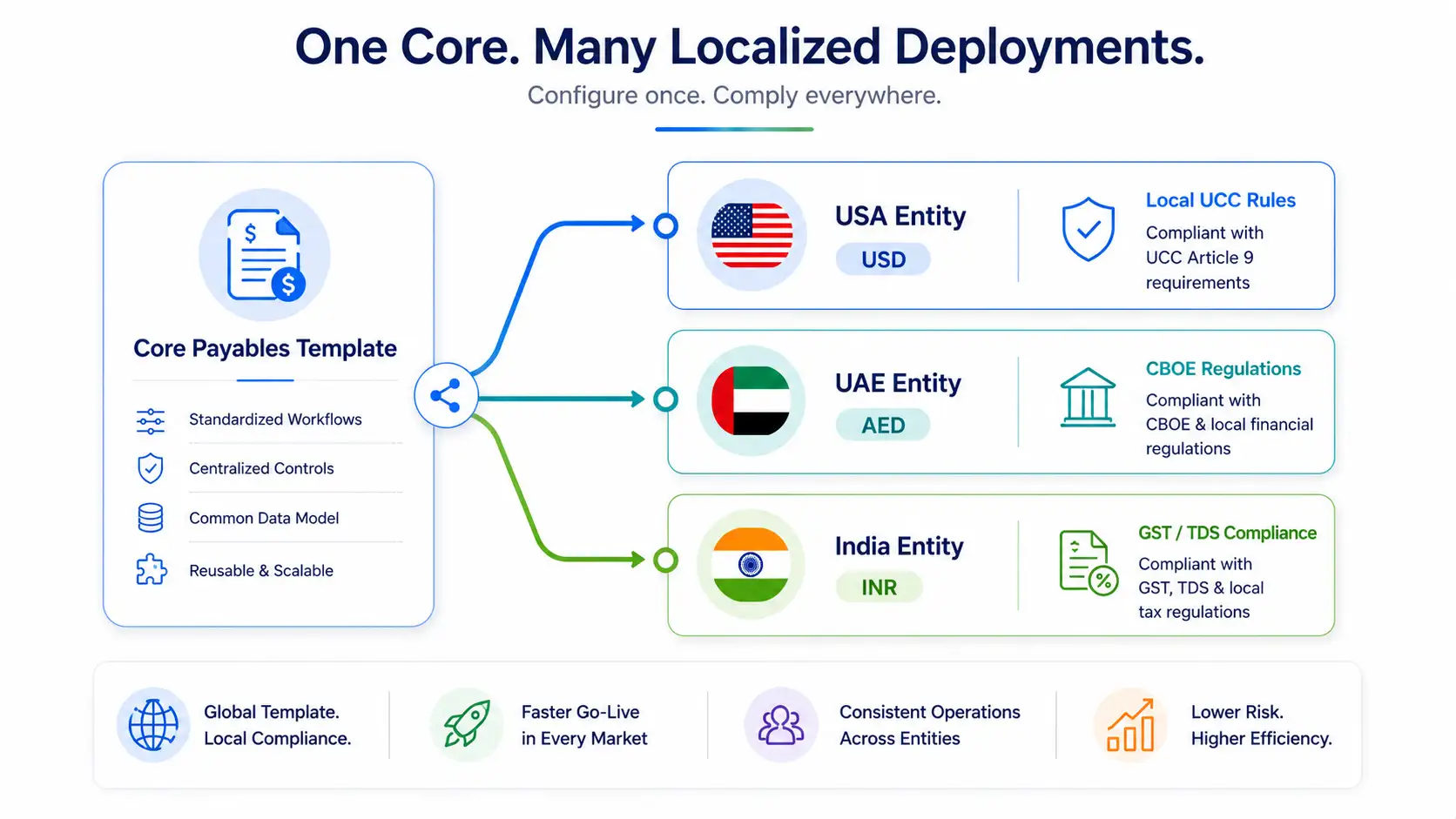
Operating trade finance programs across regions like North America, the Middle East, and India involves navigating complex local regulatory environments, tax codes, and currency structures. Configurable templates allow institutions to manage diverse operational requirements within a single global platform. A single payables finance template can be configured with specific tax rules, local currency settlement rails, and regional document mandates for an Indian subsidiary, while simultaneously enforcing distinct legal framework parameters for an entity operating in Dubai or New York.
3. Standardized Risk Governance and Operational Efficiency
Custom coding often introduces unintended operational risks and compliance gaps. Configurable templates enforce systemic governance across the institution. Because all products are deployed using standardized, pre-tested software frameworks, risk committees can trust that underwriting parameters, concentration limits, and audit trails are enforced consistently across the entire trade portfolio.
4. Scalable Corporate Client Onboarding
Large multinational corporate clients frequently demand unique financing terms for different tiers of their supplier base. Core anchor suppliers might receive non-recourse payables financing at prime margins, while smaller tier-two vendors might require purchase order financing with distinct collateral requirements. Configurable templates allow lenders to structure multi-tiered, customized programs within a single dashboard, dramatically simplifying client onboarding and ongoing account administration.
Strategic Imperative
Supply chain finance is moving away from rigid, single-product structures toward agile, multi-asset trade ecosystems. Lending institutions that rely on hardcoded legacy software will find themselves unable to meet the custom requirements of enterprise corporate clients. By transitioning to a platform powered by configurable product templates, financial leaders can eliminate technical debt, launch innovative financing structures instantly, and operate a profitable, multi-jurisdictional trade finance business.