
The Gap Between a Credit Decision and a Live Credit Rule
There is a meeting that happens in almost every lending institution. Risk has reviewed the portfolio, credit has examined the data and the business has a clear view of what needs to change. A threshold should be tightened. A borrower segment needs a different policy treatment. A new product variant should be introduced before a market opportunity disappears.
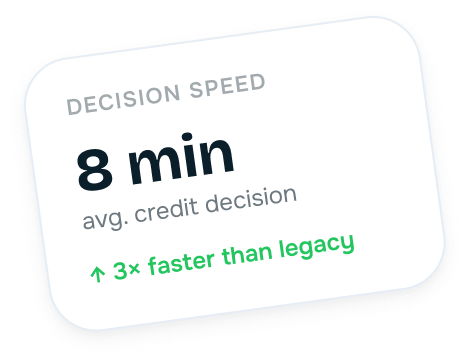
The decision itself may take an hour. Making the lending platform reflect that decision can take weeks.
This is one of the least discussed constraints in modern lending. Institutions have invested heavily in data, analytics and digital lending platforms, yet the final mile between credit strategy and system execution often remains dependent on technology tickets, vendor interpretation, development cycles and release schedules.
The result is a strange imbalance. The institution can identify a change in risk faster than ever, but may still be unable to operationalise its response at the same speed.
When Technology Becomes the Slowest Part of Credit Strategy
Credit strategy is not static. Portfolio behaviour changes, macroeconomic conditions move and new data can alter how a lender views a segment. A policy that was appropriate six months ago may need adjustment today.
In a rigid lending environment, however, even a small policy change can trigger a long chain of activity. The business documents the requirement. Technology interprets it. A vendor may need to configure or develop the change. Testing follows, then deployment. By the time the new rule is live, the institution may have spent more time implementing the decision than making it.
This is not simply an IT efficiency issue. It is a credit execution issue. A lender’s strategy only begins to create value when it is reflected consistently in every relevant lending decision.
If the platform is always several weeks behind the credit committee, technology is not supporting credit strategy. It is placing a delay between strategy and execution.
The Business Rule Engine Has Become a Strategic Layer
The business rule engine is often discussed as a technical component of a loan origination system. In practice, it is becoming one of the most strategically important layers in lending infrastructure.
A modern credit decisioning platform should allow authorised teams to define, test and govern policy changes without turning every adjustment into a software project. That does not mean removing controls or giving unrestricted access to business users. Credit policy requires governance, auditability and clear approval structures.
The objective is controlled configurability.
A credit manager should be able to understand how a rule is expressed in the platform. Changes should be versioned. Approvals should be visible. The impact of a proposed adjustment should be testable before it reaches production. When a rule goes live, the institution should know who changed it, why it changed and which decisions were affected.
This is a fundamentally different model from sending policy documents to a technology team and waiting for technical translation.
Speed Without Governance Is Not the Answer
The argument for faster credit configuration is sometimes misunderstood as an argument for uncontrolled change. It is the opposite.
The more frequently credit strategies evolve, the more important governance becomes. Manual hand-offs and technical interpretation can create their own risks: requirements are misunderstood, logic is implemented differently from policy intent, and institutions struggle to reconstruct why a particular rule was active at a particular point in time.
A configurable platform can strengthen governance when change management is built into the product. Maker-checker controls, rule versioning, simulation, approval workflows and complete audit trails allow the institution to move faster without losing visibility.
The real objective is not speed for its own sake. It is to reduce the distance between an approved credit strategy and its controlled execution.
A Better Test for Lending Technology
When institutions evaluate lending platforms, feature lists dominate the conversation. The more revealing test is simpler: ask the platform to change.
Change a credit threshold. Add an exception. Modify a segment rule. Ask who needs to make the change, how long it takes, how it is tested and what evidence remains after deployment.
That exercise reveals whether the institution is buying a platform it can operate or a platform it will continuously wait for someone else to change.
Credit teams are being asked to respond to markets with greater precision and speed. The lending infrastructure beneath them has to operate at the same velocity. Your credit strategy should determine how your technology behaves. Your technology should not determine how quickly your credit strategy can move.