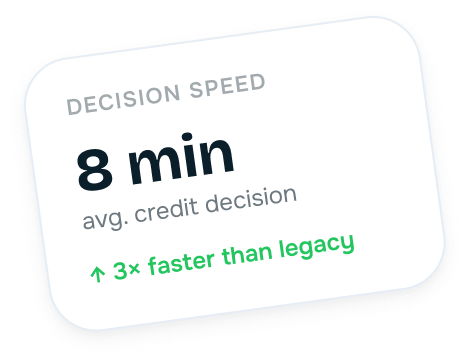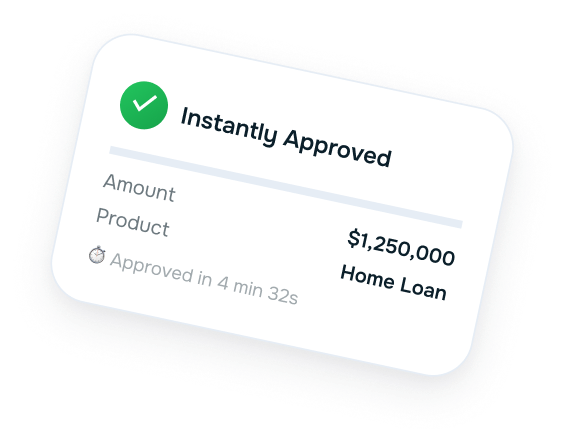

Deploying an enterprise Loan Origination System (LOS) is one of the most high-stakes technology initiatives a financial institution can undertake. It sits at the intersection of credit risk management, operational velocity, regulatory compliance, and customer acquisition. Irrespective of where an institution operates in the world, replacing or updating core origination software directly influences profitability and market share.
Despite the strategic importance of these projects, legacy implementation approaches regularly run over budget and miss delivery targets. When enterprise software implementations falter, the root cause is rarely the underlying code itself. Instead, failures stem from poor risk identification, misaligned operational priorities, and a lack of structured governance.
A Realistic Implementation Timeline
Enterprise LOS implementations vary based on portfolio complexity, but modern cloud-native architectures have compressed traditional multi-year rollouts into structured, predictable phases. A standard enterprise deployment typically spans 16 to 24 weeks.
| Weeks 1-4 | Discovery, Data Schema & Workflow Mapping |
| Weeks 5-10 | Rules Engine Configuration & System Integrations |
| Weeks 11-16 | Parallel Simulation, UAT & Regulatory Audit |
| Weeks 17-24 | Phased Portfolio Cutover & Hypercare |
Phase 1: Discovery, Architecture, and Workflow Mapping (Weeks 1-4)
This phase establishes the operational foundation. Teams map existing credit policies, document processing steps, approval hierarchies, and data models. Rather than replicating old manual workflows, business and product teams refine processes for automation.
Phase 2: Configuration and API Integration (Weeks 5-10)
Engineering and risk teams configure credit rules, scorecards, decision trees, and user interface templates. Concurrent integration work links the LOS to core banking ledgers, credit bureaus, identity verification services, and fraud detection engines.
Phase 3: Parallel Testing and Historical Simulation (Weeks 11-16)
Before live traffic touches the platform, the system undergoes rigorous testing. Historical application data runs through the new decisioning engine to verify that credit outcomes match risk expectations. User Acceptance Testing (UAT) ensures operational teams can navigate underwriting queues efficiently.
Phase 4: Phased Cutover and Hypercare (Weeks 17-24)
The institution transitions to the new platform using a phased approach. A single asset class or region goes live first, allowing IT and risk leadership to monitor performance, resolve unexpected issues, and train operational staff before migrating the entire portfolio.
Primary Implementation Risks and How to Mitigate Them
Understanding where implementations break down allows leadership to build defensive controls into the project roadmap early.
1. The Legacy Feature Parity Trap
A frequent cause of scope creep is the demand to replicate every niche workflow, form field, and custom report from the legacy system. Legacy platforms often contain decades of redundant processes designed around outdated operational constraints. Rebuilding these inefficiencies in a modern system consumes engineering capacity and dilutes the value of the upgrade. Lenders should evaluate every historical requirement against modern operational standards before adding it to the build scope.
2. Integration Complexity and Vendor Dependency
A modern LOS relies on a broad network of external data providers, including credit registries, open banking APIs, tax verification portals, and document extraction engines. Delays often occur when third-party sandbox environments lack documentation or fail to perform reliably during integration testing. Project teams must establish early integration milestones and prioritize standard RESTful API connections over custom point-to-point builds.
3. Uncleaned Legacy Data Migration
Migrating historical loan records into a new database architecture carries significant operational risk. Legacy data is frequently fragmented, inconsistent, or formatted across competing standards. Attempting to ingest uncleaned historical data into a modern schema leads to database errors and miscalculated risk metrics. Institutions should limit initial data migration to active, performing loans and retain historical archives in read-only data lakes.
Best Practices for Senior Leadership
Achieving a fast, predictable go-live requires disciplined executive sponsorship and adherence to core operational principles.
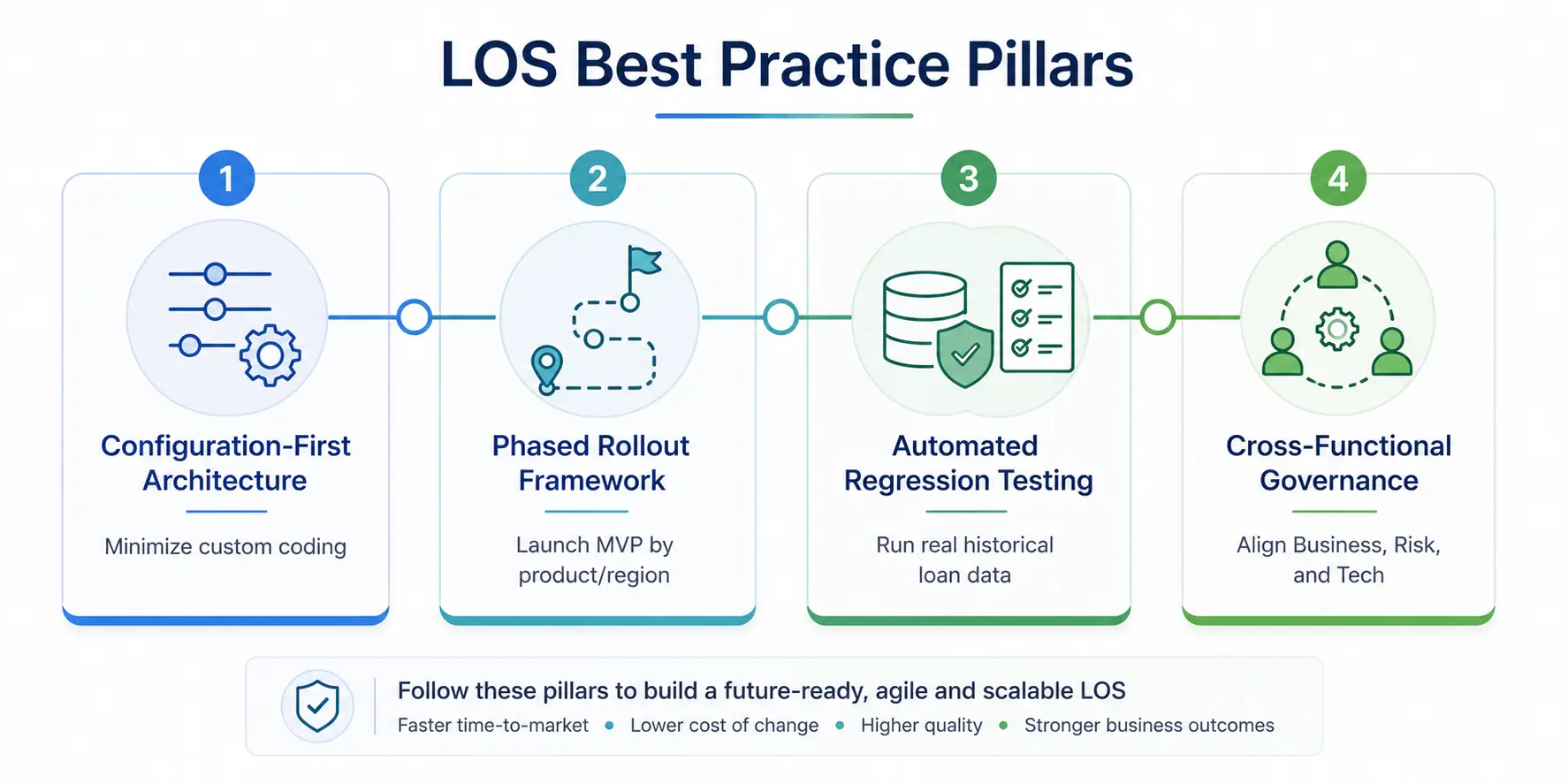
- Enforce a Configuration-First Mindset: Require vendor platforms to support visual workflow builders and low-code policy rules engines. When business and risk managers can modify credit parameters directly through administrative controls, the organization avoids lengthy engineering release cycles.
- Execute a Phased Product Rollout: Avoid “big bang” launches where all business lines transition on a single day. Roll out the platform to a narrow, well-defined segment first (such as unsecured personal loans or a specific commercial product line) before scaling across more complex asset classes like commercial trade or structured real estate finance.
- Establish Cross-Functional Project Ownership: Technology projects of this scale fail when treated purely as IT upgrades. Successful implementations require continuous co-ownership between business unit heads, risk officers, product managers, and technology leaders.
- Implement Automated Testing Pipelines: Utilize automated test suites to validate credit decisioning consistency. Testing hundreds of complex borrower profiles automatically ensures that policy updates do not introduce unvetted credit exposure.
By maintaining operational discipline, managing scope strictly, and leveraging modern API-first software architectures, financial institutions can execute LOS transformations efficiently, securing a strong competitive advantage in credit decisioning and operational speed.